
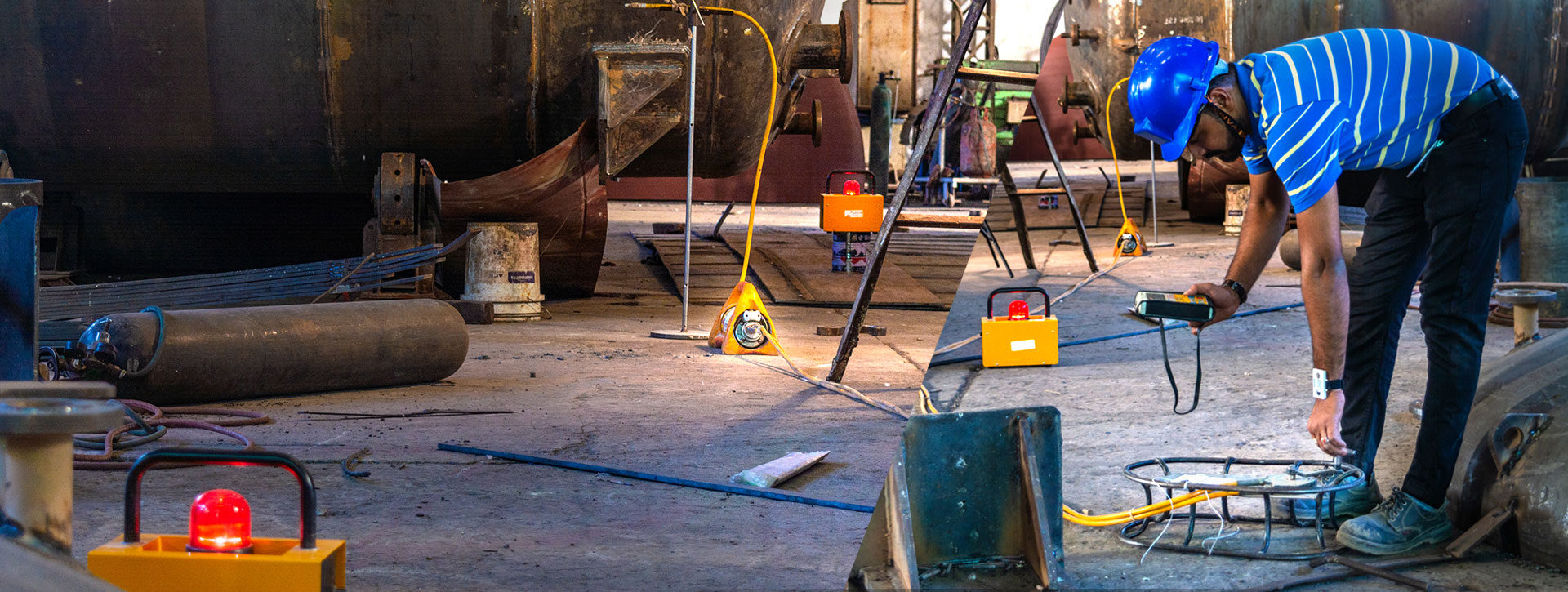
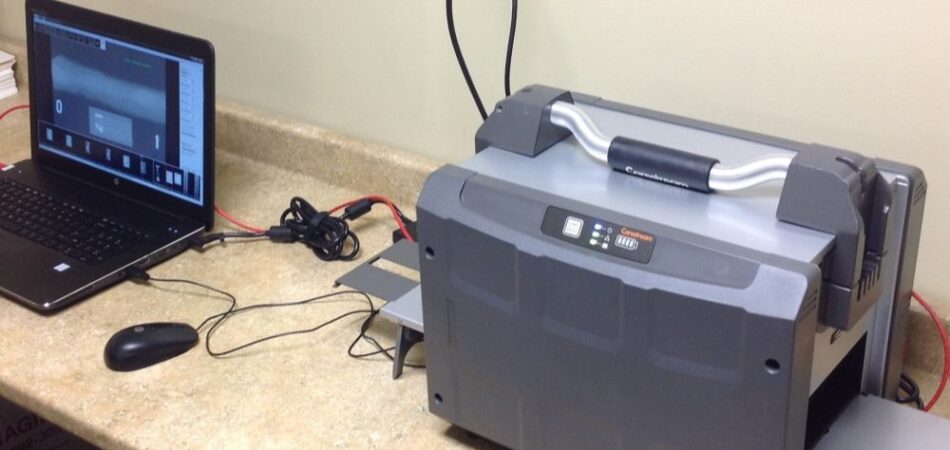
In Computed Radiography, when imaging plates are exposed to X-rays or gamma rays, the energy of the incoming radiation is stored in a special phosphor layer. A specialized machine known as a scanner is then used to read out the latent image from the plate by stimulating it with a very finely focused laser beam. When stimulated, the plate emits blue light with intensity proportional to the amount of radiation received during the exposure. The light is then detected by a highly sensitive analog device known as a photomultiplier (PMT) and converted to a digital signal using an analog-to-digital converter (ADC). The generated digital X-ray image can then be viewed on a computer monitor and evaluated. After an imaging plate is read, it is erased by a high-intensity light source and can immediately be reused – imaging plates can typically be used up to 1000 times or more, depending on the application.
Key Features and Benefits:
Phosphor Imaging Plates (PIPs) can be reused thousands of times, replacing costly film and chemicals.
Images are converted into digital format within 20–40 seconds, allowing for immediate review, adjustment, and sharing, often in DICONDE format.
CR offers excellent image quality with roughly 25% faster turnaround times compared to conventional film radiography.
Plates are flexible and can be used on small-diameter pipes and complex shapes similar to traditional film.
High dynamic range minimizes the need for multiple shots, allowing for inspection of components with variable thicknesses.
Why choose our service
Benefits of Our Services
In order to endeavor for continuous optimum customer satisfaction, SITPL adapts creative flexibility and at times goes out of one’s way to meet the customer’s specific needs.